


Welcome to a guest post by fellow Bay Area-based writer Laura Zhang!
Laura is an Oakland-based freelance travel journalist and editor. Raised in Hong Kong and Shanghai, and returning recently from Berlin, she is passionate about diverse storytelling and writes about the Asian diaspora, food and drink, and boutique travel experiences. Her work has appeared in Condé Nast Traveler, W Magazine, Eater, among others, and she’s the Digital Editor at Teeth Magazine. Laura also runs a monthly Substack, Golden Hour, that introduces readers to incredible Asian-owned travel and hospitality businesses around the world.
I met Laura at a recent gathering of writers and creatives I co-hosted in Oakland, CA earlier this summer. And, I immediately felt connected to her essence and calling as a storyteller. After a few weeks of phone tag, we met for a beautiful picnic where we basked in the sun (much to the horror of our Asian moms and aunties), and connected the dots of our personal and family lives, our experience transitioning from corporate careers to freelance creative ones, our love for stories (both those in our backyards and around the world), places we call home (and places we have adventured to), and - honestly - just what’s it’s like to be girls figuring out life in our 30s. 😊
Like me, Laura has navigated many rooms where she’s felt like the odd one out. Like me, she’s a third-culture kid still very much learning to trust her voice and take up space. And, like me, she’s building towards a dream that her parents may never have imagined.
Reading this piece, I hope you feel seen. I know I did. And, I hope you feel encouraged to trust yourself, on whatever path you might be on.
With that, please enjoy this beautiful essay by Laura Zhang…
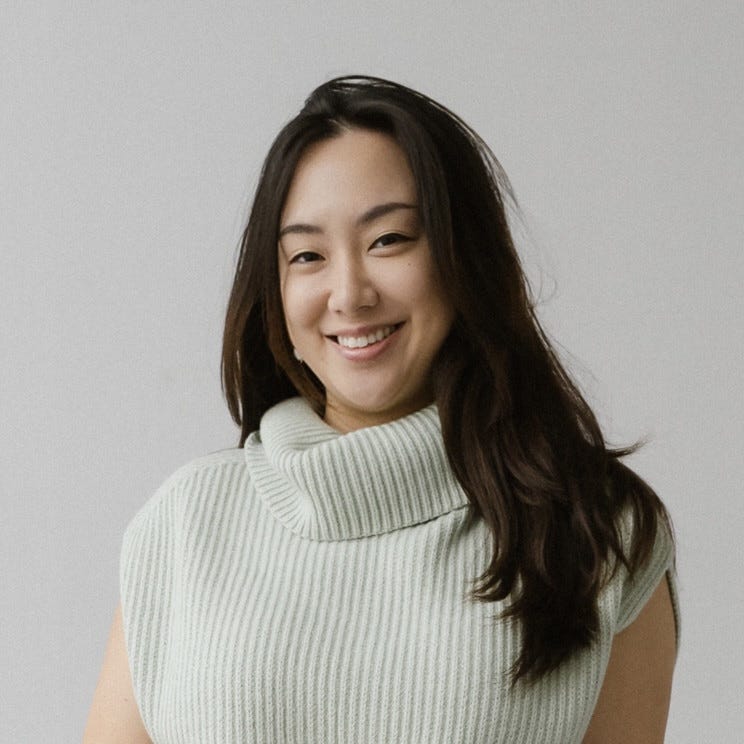
Hi Tomatokind readers,
I’m so thrilled for this lovely opportunity to write directly to you (thank you, Vanessa!), and I hope your August has been both creative and restorative!
A couple weeks ago, I attended a conference for travel writers and photographers in the Bay Area. As a newer freelance travel writer, I was giddy leading up to it, knowing I’d be in the company of industry veterans who have been traveling and writing for longer than I’ve been alive.
Throughout the conference, one lesson kept surfacing across workshops and panels: don’t be an extractive journalist. I nodded along, hard, because I vehemently agree that every writer should model respect and reciprocity when engaging with cultures that aren’t our own. But every so often, the lesson came with a more pointed warning: don’t be the wealthy Western colonizer, parachuting into a developing nation, only taking and never giving.
I tilted my head to the side. I understood the intention behind the lesson, but I’d also been acutely aware that I was one of the only writers of color in the room. And hearing it framed this way confirmed something I’d been feeling for a long time: I wasn’t quite sure where writers like me fit into the broader landscape of travel journalism.
I thought about the travel literature I’d been encouraged to read as I entered the industry — from Paul Theroux’s The Great Railway Bazaar to Peter Matthiessen’s The Snow Leopard — influential, canonical books about journeys through Asia, filtered through the eyes of Western writers. And sitting there, I began jotting down some questions:
What happens when a place is repeatedly seen through an outsider’s eyes?
What gets exoticized or glorified, what gets diminished or erased?
What stories are waiting to be told?
The Rooms Where I Don’t See Myself
Being the only Chinese-American woman in a room is not new for me. When I was 14, I left my home in Shanghai to attend high school in Connecticut, and moved from an environment where everyone looked like me to one where very few did. I quickly learned to seek out commonality as a way of finding safety in unfamiliar places: if another Asian student walked into the room, I’d try to lock eyes immediately.
Every room came pre-loaded with a different version of me. I just had to figure out what it was. In some rooms, the distinction between Chinese-American and Chinese — or California-born versus Shanghai-born — didn’t register at all. Nor did it seem to matter; I looked different, therefore I was different. In other rooms, my Shanghai upbringing stirred up a lot of intrigue: how is your English so fluent? And was your grandmother forced to bind her feet? Then there were rooms where I read as purely American. Someone would launch into a tirade about their “irritating” Chinese neighbors or colleagues, forgetting I was still very much Chinese.
I’d go from highly visible to completely invisible, sometimes in the same afternoon. Shape-shifting to fit the room became something I naturally did. I assumed the rooms would change as I got older. But when I left the corporate world for a freelance writing career, I found the same ones waiting for me.
The rooms may not have changed, but I’ve been learning that my response to them can.


Learning to Take Up Space
For a long time, I equated taking up space with being the loudest person in the room, something I’m not used to doing. But in travel writing, where stories about my own culture are so often handed to writers outside of it, taking up space has turned out to be necessary. And, to my relief, it doesn’t require a big personality, just a little persistence: pitch anyway (especially outside of Lunar New Year and AAPI Heritage Month!), follow up again and again, and ask the hard-hitting questions out loud: why isn’t an AAPI writer telling this story?
I’ve been working on expanding instead of shrinking, despite my natural instinct to stay out of the spotlight and not ruffle feathers. It’s one of the reasons I started my Substack last year. In my introductory post, I wrote: “If my pitches don’t land with travel publications, but they fit Golden Hour’s focus, I’ll bring them here.” I still very much mean that. If you can’t find a platform that will publish your story, build your own and take up space anyway.
If you can’t find a platform that will publish your story, build your own and take up space anyway. - Laura Zhang
Writing From My Heritage
When Vanessa and I met up about a month ago, we talked about the extraordinary, complex stories tucked inside ordinary lives, from the questions that prompt our immigrant parents to open up about their pasts to how we can create space for them to tell those stories in their own words. I haven’t stopped thinking about it!
There’s a particular power in writing from a place you know intimately. My own words seem to come more easily when I’m writing from my heritage — bringing the friends and family who have shaped my life into sharper focus, tracing my cultural identity, and capturing that particular vertigo of belonging to two places at once: China and the U.S., two homes I carry with me in different ways.
A writer from another culture can write about the best meals they’ve had while visiting Shanghai, and there will absolutely be an audience for that. But they won’t be able to write about what the annual hairy crab season felt like for me growing up in the ’90s: the newspaper spread across the table, the vinegar and ginger hitting my palate, my grandmother and mom taking light, affectionate jabs at each other’s crab-eating technique. That’s not automatically the better story of the two. It’s simply one that doesn’t exist unless I write it.
Trusting My Voice
I’m grinning as I type this because I suddenly remembered 12-year-old me hunched over a pile of magazines, scissors in hand, hunting down letters to spell out an Oscar Wilde quote on my middle school binder: “Be yourself; everyone else is already taken.” Even 12-year-old me seemed to know that there were only stories I could tell.
It’s not always easy for me to trust my voice, especially when there are so many voices competing for attention these days on traditional outlets, Substack, social media, the whole roaring feed. As AI gets more fluent in producing a certain kind of polished travel story, personal narrative and an irreplaceable point of view will only become more valuable — especially in rooms where you are the one of one.
I’m still learning to trust that I don’t need to be the most eloquent voice in the room, or the most experienced, or have the wittiest take. I just need to pay attention to the stories that keep tugging at me, and bring my own perspectives.
If you’re sitting on a story that nobody else is positioned to tell, I hope you give yourself permission to draft it and put it out into the world. Whatever it is, trust that there is value in the things that only you can see and say.
Note from Vanessa: I’m so grateful to Laura for sharing a piece of her inner world here. A few sentences that have imprinted on my little soul:
“…the newspaper spread across the table, the vinegar and ginger hitting my palate, my grandmother and mom taking light, affectionate jabs at each other’s crab-eating technique. That’s not automatically the better story of the two. It’s simply one that doesn’t exist unless I write it.”
What about you? What stayed with you? Let Laura and I know in the comments :)
Plus, stay tuned for more pieces by Laura over on her monthly Substack Golden Hour. I’ll see you over there!
With zeal and gratitude for this creative life,
Vanessa & Laura!
P.S. If you enjoyed this piece, you might also enjoy these inspiring stories and features from the archives…


